Vancouver Rare Plants
Monstera Bulbasaur - 002
Monstera Bulbasaur - 002
Low stock: 1 left
Couldn't load pickup availability
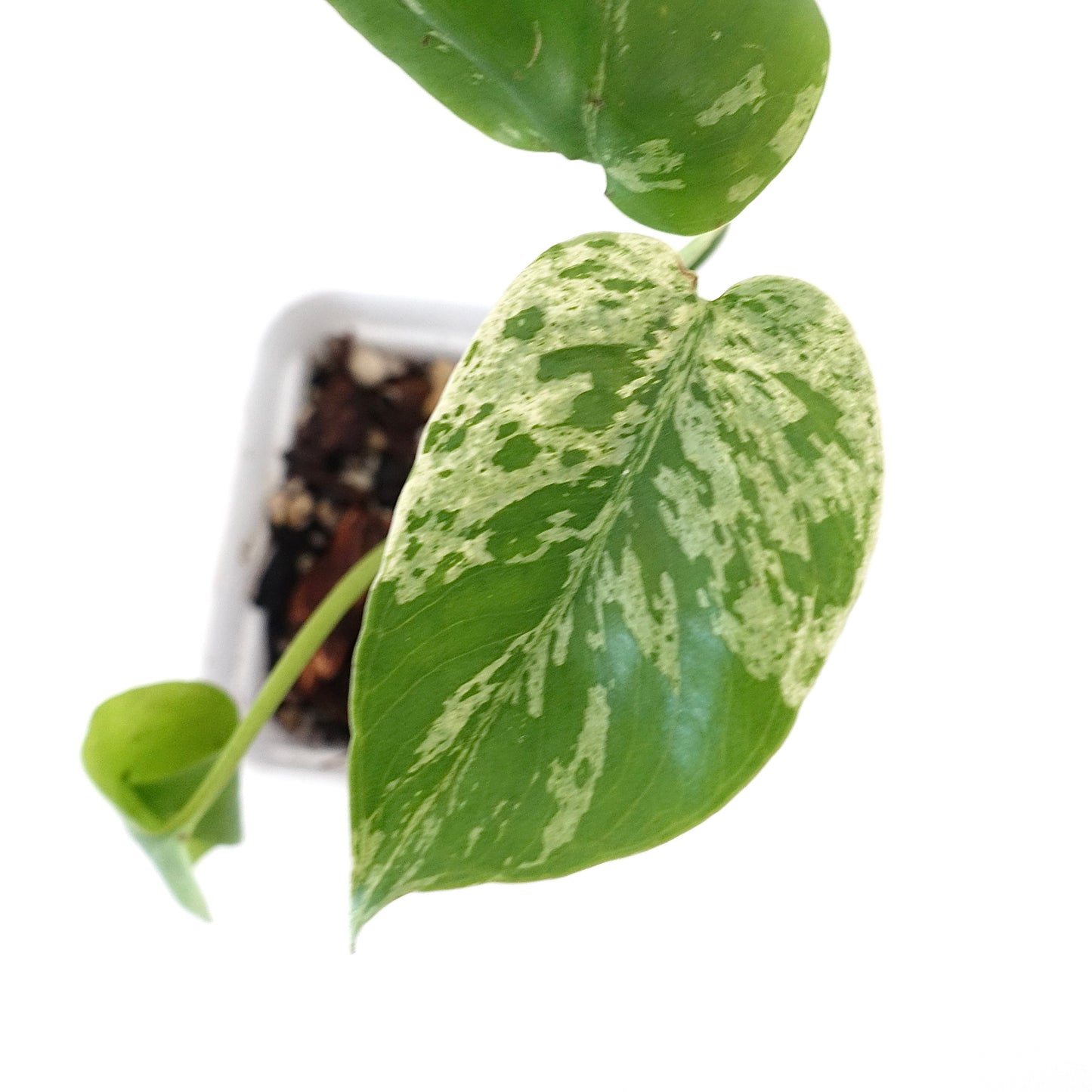
Most variegated Monsteras give you high contrast — bold white or cream sectors against dark green. The Monstera Bulbasaur does something different. Its variegation is softer, more complex, and arguably more intriguing: a mosaic of deep green, washed mint, and creamy patches that shifts across the leaf surface like camouflage — unpredictable, mottled, and completely unique on every leaf. The effect on a mature, climbing specimen is unlike anything else in the Monstera world.
First discovered in China. Named after a Pokémon. Coveted globally. And now available in Canada.
BOTANICAL DETAILS
| Botanical name | Monstera deliciosa 'Bulbasaur' — mosaic variegated sport mutation |
| Common names | Monstera Bulbasaur, Monstera deliciosa Bulbasaur, Bulbasaur Monstera |
| Also listed as | Monstera deliciosa mosaic variegated, Monstera Bulbasaur variegated, Monstera camo variegated, Monstera deliciosa mint variegated, Monstera Bulbasaur TC, White Bulbasaur Monstera, Monstera deliciosa Yang Liu mutation |
| Origin | Seed-sport mutation first discovered by Yang Liu in China; the "Bulbasaur" nickname spread rapidly through collector communities worldwide due to the mottled, pixelated variegation pattern's resemblance to the Pokémon character |
| Variegation type | Mosaic / camouflage-style — broken, clouded mix of deep green, washed mint, and creamy white patches; mottled and pixelated in character; each leaf unique; variegation variable but more stable than chimeric Albo; may appear greener in juvenile / early growth, strengthening to full mosaic expression at maturity |
| Leaf character | Classic Monstera deliciosa fenestrated leaves with deep splits and perforations at maturity; mosaic variegation visible across the full leaf blade; broad, impressive scale at maturity |
| Growth habit | Climbing vine — aerial roots, vining stems, increasingly large leaves with age and vertical support; benefits significantly from a moss pole |
| Skill level | Intermediate — more forgiving than Albo; approachable for collectors with Monstera experience |
ABOUT THIS PLANT
Monstera deliciosa 'Bulbasaur' is a seed-sport mutation of Monstera deliciosa — the world's most beloved tropical houseplant — first identified by collector Yang Liu in China. The mutation produces a mosaic, camouflage-like variegation pattern entirely distinct from any other named Monstera variegated form. Rather than the bold, high-contrast white sectors of Albo Variegata or the stable cream speckle of Thai Constellation, Bulbasaur shows a softer, more diffuse mix of deep green, washed mint-green, and creamy patches that flow across the leaf blade in irregular, mottled, almost pixelated arrangements. The name comes from the mottled green-on-green effect reminiscent of the iconic Pokémon — and it stuck immediately in collector circles worldwide.
What makes Bulbasaur particularly compelling to collectors — beyond its unique aesthetic — is its relative vigour compared to other rare variegated Monsteras. Because the mosaic variegation retains chlorophyll even in lighter mint and cream areas more efficiently than pure white sectors, Bulbasaur grows more vigorously than Albo Variegata and can be easier to sustain long-term. It is not as slow and temperamental as a white-sectored chimeric Monstera. Given good light and a moss pole, it climbs, develops fenestrations, and produces increasingly dramatic leaves as it matures.
Young and juvenile plants often show subtler, greener variegation — this is normal and characteristic. The full mosaic expression develops more boldly as the plant matures and leaves grow larger. Buying a Bulbasaur is an investment in watching a plant reveal itself over time.
Monstera Bulbasaur was among the most aggressively priced rare plants in the global collector market at its peak — strong multi-leaf specimens reached five-figure prices in early collector circles. TC availability has since broadened access significantly. It remains one of the most distinctive and sought-after named Monstera mutations available to collectors worldwide — and in Canada, it is still genuinely rare to source.
CARE REQUIREMENTS
| ☀️ Light | Bright indirect light is essential — both for maintaining the mint and cream mosaic variegation and for supporting the vigorous climbing growth this plant is capable of. Too little light reduces variegation intensity and slows growth significantly. Avoid direct midday sun, which scorches the lighter mosaic areas faster than deep green tissue. An east or west-facing window, a south-facing window with a sheer curtain, or a quality grow light works well. Grow lights are particularly useful in Canadian homes during darker winter months. |
| 💧 Watering | Water when the top 2–3 cm of soil feels dry. Water thoroughly and allow to drain completely — never allow roots to sit in standing water. Bulbasaur is more tolerant of brief dryness than Albo and less prone to rapid root stress, but overwatering remains the most common cause of decline in all variegated Monsteras. In winter, when growth slows, reduce watering frequency and err on the drier side. |
| 💦 Humidity | 60–80% preferred; 55% minimum. Higher humidity supports faster, healthier growth and prevents marginal browning on lighter mosaic areas. In dry Canadian winters — when ambient indoor humidity commonly drops to 25–40% — a humidifier placed nearby makes a significant difference. Bulbasaur is somewhat more humidity-tolerant than pure white-sectored variegated Monsteras, but consistent humidity above 60% produces noticeably better leaf quality and faster growth. |
| 🌡️ Temperature | 18–27°C (65–80°F). Keep away from cold drafts, air conditioning vents, and cold exterior windows in winter. Like all Monstera deliciosa, Bulbasaur tolerates a wider temperature range than more delicate aroids — but consistent warmth above 18°C maintains the fastest, most vigorous growth and the most developed variegation expression. |
| 🪴 Soil | Chunky, well-draining aroid mix — orchid bark, perlite, and coco coir. Excellent aeration is essential: Monstera deliciosa aerial roots need oxygen as well as moisture. Avoid dense or moisture-retaining potting mixes. As the plant grows, an established root system benefits from slightly larger pot sizing — unlike compact Alocasia, Monstera appreciates room to spread and climb. |
| 🌱 Fertiliser | Balanced liquid fertiliser every 4 weeks during spring and summer. Because Bulbasaur retains better chlorophyll efficiency than Albo-type variegated Monsteras, it responds more positively to regular feeding during the growing season. Reduce or stop in fall and winter. Do not fertilise during the first 3–4 weeks after arrival. |
| 🧗 Support | A moss pole or sturdy climbing support is strongly recommended. Monstera deliciosa climbing vertically develops dramatically larger, better-fenestrated leaves than unsupported specimens. As Bulbasaur matures and climbs, both leaf size and the mosaic variegation pattern become more dramatic and impressive. This is one of the plants where a moss pole makes a visible, significant difference over time. |
GROWTH BEHAVIOUR
Monstera Bulbasaur is a moderate grower — faster and more self-sustaining than Albo Variegata, and considerably more vigorous than most chimeric-variegated aroids. The mosaic variegation retains meaningful chlorophyll even in lighter areas, which means the plant can photosynthesize more efficiently across its whole leaf surface than a white-sectored plant. This translates to steadier growth, better resilience, and a more rewarding long-term growing experience.
Young and juvenile specimens typically show subtler, greener variegation — the mint and cream mosaic expression is less developed at this stage. This is normal and expected. As the plant grows larger, climbs, and produces mature leaves, the variegation becomes bolder, more defined, and more characteristically "Bulbasaur" in its camouflage-like complexity. Collectors who buy small plants are buying potential — and the transformation from juvenile to mature specimen on this cultivar is one of the most rewarding in the rare Monstera world.
With vertical support, light fenestrations begin developing on mature leaves — the iconic splits of Monstera deliciosa — adding another layer of visual complexity alongside the mosaic variegation. A well-supported, mature Bulbasaur with broad, fully fenestrated, mosaic-patterned leaves is a genuinely spectacular plant.
Propagation is through stem cuttings including at least one node. Because the variegation is mosaic rather than chimeric, cuttings generally carry the variegation through — though the expression varies between cuttings and early leaves may be greener before the pattern re-establishes.
ORDERING IS EASY
- Choose Your Favorite Plants: Browse through our selection and pick the plants with your preferred variegation.
- Add to Cart: Once you've found the perfect plant, simply add it to your cart.
- Select Delivery Option: Decide whether you'd like to pick up your plants in person or have them shipped overnight domestically.
- Complete Your Purchase: Finalize your order and get ready to enjoy your new green companions!
LOCAL PICKUP
We don’t have a physical storefront, but if you’re local to Vancouver you can choose free in-person pickup at:
📍Richmond Chinese Baptist Church,
10311 Albion Rd, Richmond, BC V7A 3E5
***Before checkout***
- Choose Store Pickup
- Select your preferred pickup date and time slot
- Add any notes in the Additional Details box.
If the available slots don’t work for you, select any time slot to proceed and then DM Lily on Instagram @vancouverrareplants to arrange a better time.
***At checkout***
- Select Local Pick-up (North Richmond Alliance Church) to waive the shipping fee.
🇨🇦 SHIPPING
Prefer delivery? We offer 1-2 days domestic shipping for a flat rate of
- $19.99 - BC-wide
- $39.99 - Canada-wide (outside BC)
Orders typically ship the following Monday or Tuesday after purchase.
From October to April, all shipments include a heat pack and insulation to protect your plants in transit.
If you’re concerned about weather conditions, DM Lily on Instagram @vancouverrareplants to arrange a suitable shipping date.
COLLECTOR NOTES
In a landscape dominated by Albo Variegata and Thai Constellation, Monstera Bulbasaur occupies a genuinely distinct aesthetic and horticultural position. Where Albo delivers maximum contrast — white against black-green — Bulbasaur delivers complexity: layers of green, mint, and cream in a mottled, ever-shifting pattern that rewards close attention in a way that high-contrast variegation does not. It is a plant that looks different every time you study a new leaf.
For collectors who already own Thai Constellation, Bulbasaur is the natural counterpart to explore: similar overall vigour and care demands, but a fundamentally different variegation aesthetic. For collectors who find Albo too temperamental, Bulbasaur offers rare Monstera variegation that is genuinely more manageable — without compromising on collector appeal or rarity.
The origin story also matters in collector circles: a seed-sport discovered by an individual collector in China, given an inspired nickname that circulated globally before the plant itself did, reaching extraordinary prices before TC access democratised supply. There are few collector plants with a more vivid cultural origin story than Bulbasaur — and that story is now part of what you own when you grow one.
In Canada, Monstera Bulbasaur remains genuinely rare. It does not appear in mainstream retail and is sporadically available through specialist importers. TC availability has made it more accessible globally, but well-established, acclimated specimens in Canada are still infrequently offered.
FREQUENTLY ASKED QUESTIONS
How is Monstera Bulbasaur different from Monstera Albo Variegata?
They are fundamentally different variegation types. Monstera Albo Variegata is a chimeric mutation producing bold, high-contrast white sectors on deep green leaves — striking but demanding and prone to reversion. Monstera Bulbasaur has a mosaic mutation producing a softer, more complex blend of deep green, washed mint, and creamy patches in a camouflage-like pattern. Bulbasaur retains chlorophyll more efficiently in its lighter areas, making it more vigorous and easier to sustain than Albo. The aesthetic is more layered and subtle; the growing experience is more forgiving.
How is Monstera Bulbasaur different from Thai Constellation?
Thai Constellation is a tissue-cultured Monstera with relatively stable cream speckle variegation on a mid-green base — consistent, predictable, and widely available. Monstera Bulbasaur has a mosaic camouflage variegation that shifts more dramatically from leaf to leaf — deeper green, stronger mint tones, and a more mottled, pixelated pattern. Bulbasaur is rarer and less predictable; Thai Constellation is more stable and more consistent. Both are Monstera deliciosa variegated forms, but they look and behave differently.
Is Monstera Bulbasaur variegation stable?
More stable than chimeric Albo-type variegation, but still variable. The mosaic pattern shifts from leaf to leaf — some leaves showing more mint and cream coverage, others appearing deeper green with lighter mosaic patches. Juvenile plants often appear greener initially; the full mosaic expression develops and strengthens as the plant matures. Reversion to fully green is possible but less common than with chimeric white-sectored varieties. Overall, Bulbasaur is one of the more reliable variegated Monsteras to sustain long-term.
Why does my Monstera Bulbasaur look mostly green? Where is the variegation?
This is very common and completely normal in young or recently established Bulbasaur specimens. Juvenile plants and early-stage cuttings often produce greener leaves with less visible mosaic expression. The full camouflage variegation — the deep green, mint, and cream mosaic pattern — typically develops and intensifies as the plant matures, climbs, and produces larger leaves. If your plant is growing, give it time. Each new leaf flush generally shows progressively more developed variegation, especially once the plant is climbing with vertical support.
Where can I buy Monstera Bulbasaur in Canada?
Monstera Bulbasaur does not appear in mainstream Canadian retail and is only sporadically available through specialist rare plant importers. TC availability has made it more accessible globally, but well-established, acclimated specimens in Canada remain genuinely rare to find. We are one of the few boutique rare plant stores in Canada offering this variety. Contact us to be added to a waitlist or check back when new stock arrives.
Does Monstera Bulbasaur need a moss pole?
Strongly recommended. Monstera deliciosa is a natural climber, and Bulbasaur — like all deliciosa forms — develops significantly larger, better-fenestrated, and more dramatically variegated leaves when it can climb vertically. Unsupported specimens stay smaller and produce less impressive foliage. Introducing a moss pole early and guiding aerial roots onto the support produces the best long-term results. A mature, well-supported Bulbasaur with broad, fenestrated, mosaic-patterned leaves is a genuinely spectacular plant.
Is Monstera Bulbasaur easier to care for than Albo?
Yes — generally more forgiving. Because the mosaic variegation retains chlorophyll more efficiently than pure white sectors, Bulbasaur can photosynthesize more effectively across its full leaf surface, making it less sensitive to light fluctuations and less prone to the growth stalling that can occur with heavily white-sectored Albo plants. It also tends to be less prone to reversion. For collectors who find Albo too temperamental, Bulbasaur offers genuine rare Monstera variegation in a more manageable package.
What humidity does Monstera Bulbasaur need?
60–80% relative humidity is preferred, with 55% as a minimum. Higher humidity produces faster growth and prevents marginal browning on lighter mosaic areas. In Canadian homes during winter, ambient humidity commonly drops to 25–40% — a humidifier placed nearby makes a significant difference. Bulbasaur is somewhat more humidity-tolerant than pure white-sectored variegated Monsteras, but consistent humidity above 60% produces the best leaf quality and growth rate.
Why was Monstera Bulbasaur so expensive when it first appeared?
When Yang Liu's discovery became known in collector circles, supply was extremely limited — a single mutation with no established propagation pipeline. Strong multi-leaf specimens reached extraordinary prices in the early collector hype phase. TC propagation has since significantly broadened supply and reduced prices from those peaks. The plant's collector appeal — unique mosaic variegation, compelling origin story, vigorous growth relative to Albo — remains strong. It is still a rare and genuinely special plant; it is simply no longer at speculative pricing levels.
Can I propagate Monstera Bulbasaur and will the cuttings keep the variegation?
Yes — through stem cuttings with at least one node. Because Bulbasaur's variegation is mosaic rather than chimeric, cuttings generally carry the variegation through more reliably than Albo cuttings. Early leaves from a new cutting may appear greener while the plant re-establishes, but the mosaic expression typically returns as the cutting matures and grows. Choose cuttings from sections showing good mosaic coverage for the best results.