Vancouver Rare Plants
Alocasia Black Velvet Pink - 002
Alocasia Black Velvet Pink - 002
Low stock: 1 left
Couldn't load pickup availability
PRODUCT SUMMARY
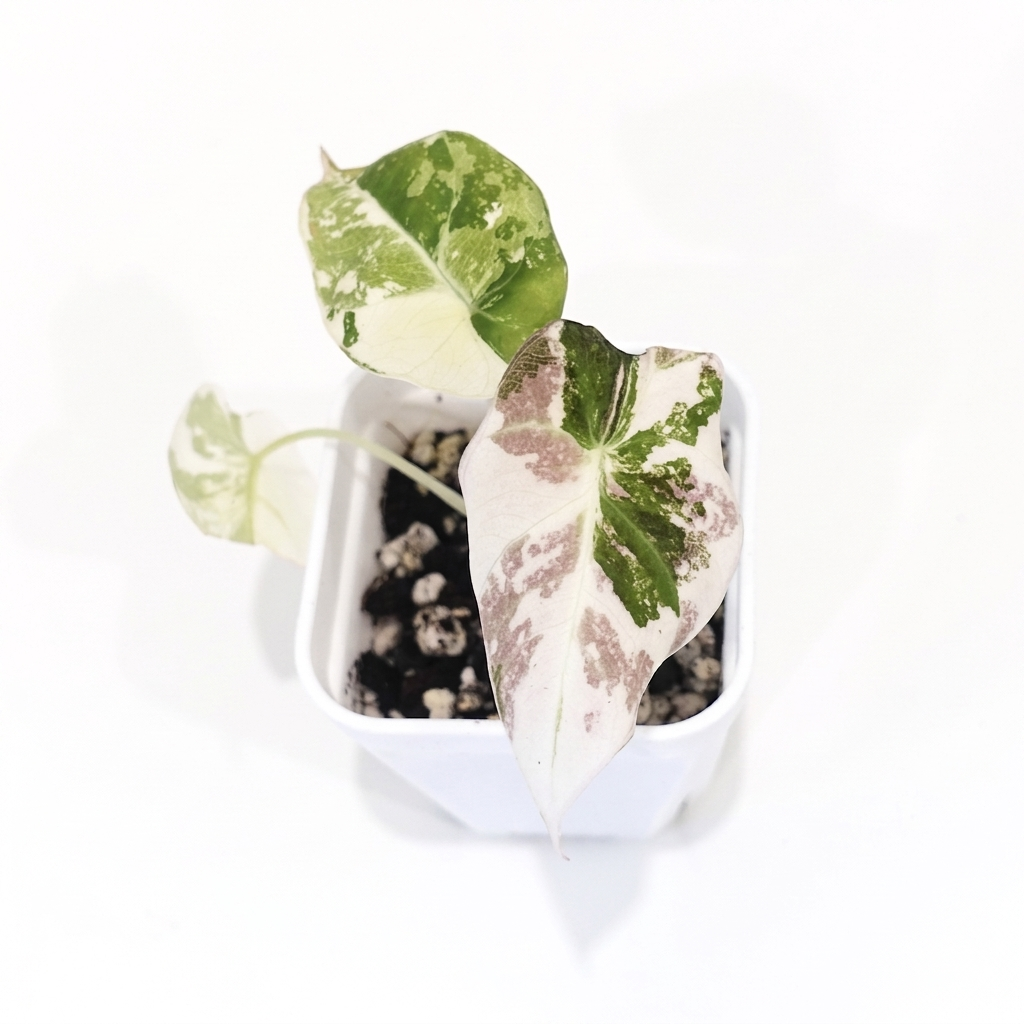
The Alocasia Black Velvet Pink is the rare variegated expression of the beloved "little queen," Alocasia reginula. Its signature is texture and contrast: thick, suede-soft leaves so deeply dark they read as black, cut by bold silver-white veins — and now lit with irregular sectors of blush pink and pale cream. Because that pink is chimeric, every plant is genuinely one of a kind, and so is every leaf. Compact enough for a shelf, dramatic enough to own the room.
Each plant is hand-selected and acclimated in our care before it ships. We send rare and variegated Alocasia across Canada with season-appropriate protection.
BOTANICAL NAME
Alocasia reginula 'Black Velvet' (pink variegated form).
Black Velvet is a true, distinct species — not a hybrid. The name reginula means "little queen," and the plant earns it. It hails from the shaded limestone cliffs of Sabah, in Malaysian Borneo, though its wild habitat wasn't formally confirmed until 2021. The pink variegated form does not occur in the wild: it arose in tissue culture, which means these plants are ethically propagated rather than wild-collected — a reassuring point given how many rare Alocasia face pressure in their native range.
COMMON & ALTERNATE NAMES
Collectors search for this plant under several names and spellings. You may know it as:
- Alocasia Black Velvet Pink Variegated
- Alocasia Pink Black Velvet
- Alocasia reginula variegata (pink)
- Pink variegated Black Velvet
- "Little queen" Alocasia, pink form
KEY FEATURES & DISTINGUISHING TRAITS
- Near-black, velvety leaves with a matte, suede-like finish unlike the glossy surface of most Alocasia — the texture is half the appeal.
- Bold silver-white veins tracing across the dark blade for that high-contrast, almost graphic look.
- Chimeric pink & cream variegation in irregular sectors. Against a near-black background, the pink reads with exceptional contrast — far more striking than the same variegation on a light-leaved plant.
- Compact jewel size — a small, upright grower that stays shelf-friendly while commanding attention.
- Truly one-of-a-kind: because the variegation is chimeric, no two plants are alike. The listing photos show the specific specimen you'll receive (or a close representative — please check your listing notes).
NOT TO BE CONFUSED WITH
- Standard (green) Black Velvet — the classic A. reginula with silver veins but no pink or cream sectors.
- White or "albo" variegated Black Velvet — crisp white sectors instead of pink, and Gold (aurea) Black Velvet — yellow-gold variegation. These are sibling variegated forms of the same species, frequently mixed up online.
- Other dark jewel Alocasia such as Dragon Scale or Maharani / Grey Dragon — different leaf texture and veining entirely.
CARE REQUIREMENTS
Light: Medium to bright indirect light. Black Velvet tolerates lower light better than many aroids — a nod to its deep-shade cliff habitat — but the variegated form needs good, bright indirect light to support its colour. Avoid direct sun: it scorches the leaves, and on a near-black plant a pale scorch mark shows badly and won't heal.
Humidity: Aim for 60–80%. The thick velvet leaves hold moisture better than thin-leaved Alocasia, but the pink and cream sectors have less protective pigment and dry out first — crispy edges on the light areas are usually your earliest sign that humidity has dropped. In Canadian winters, indoor heating can pull humidity well below this, so a nearby humidifier is your friend.
One important quirk: do not mist Black Velvet directly. Water sitting on that velvety surface invites fungal problems. Raise humidity with a humidifier or grouping nearby, not by spraying the leaves.
Water: Let the top inch of mix begin to dry, then water thoroughly. This plant is very sensitive to overwatering — soggy roots are the most common way to lose it. Drainage is genuinely the single most important factor in keeping it happy.
Soil: A chunky, fast-draining aroid mix — bark, perlite or pumice, and coco or quality aroid blend — so the roots can breathe.
Temperature: Warm and stable, roughly 18–27°C. Black Velvet is notably cold-sensitive; keep it above ~15°C and away from drafts, as a cold snap can trigger a sudden, dramatic decline.
Feeding: A light hand. This is not a heavy feeder and its roots are sensitive to fertilizer salts — dilute, and feed only during active growth.
Toxicity: Contains calcium oxalate and is toxic to pets and people if ingested. Keep out of reach.
GROWTH BEHAVIOUR & VARIEGATION STABILITY
Black Velvet is a slow, deliberate grower that produces leaves one at a time — which is part of why each new leaf feels earned. It stays compact, making it ideal for shelves, cabinets, and grouped displays.
Variegation stability: The pink variegation is chimeric and unstable. Expression varies leaf to leaf — some leaves arrive with strong pink sectors, others lean cream or show very little. It can increase, fade, or revert toward solid dark over time, and it cannot be guaranteed or "fixed." This is entirely normal for variegated reginula and is exactly what makes a well-variegated specimen so coveted. Bright indirect light supports the best expression; low light tends to suppress it.
Seasonal dormancy: In cold, low-light Canadian winters, Black Velvet often slows down or goes semi-dormant and may drop a leaf or two. As long as the corm stays firm, it's resting, not dying — ease off watering and it will pick back up as light returns.
COLLECTOR NOTES
What makes Black Velvet Pink special isn't just rarity — it's contrast. The dark, light-absorbing leaf makes pink and cream sectors glow in a way no light-leaved variegate can match. Pair that with the plant's compact size and sculptural texture and you have a true centrepiece, even on a small shelf.
Best suited for: collectors who enjoy a responsive, slightly particular jewel Alocasia, and confident beginners ready to mind humidity, drainage, and warmth. If you want guaranteed, unchanging variegation, a chimeric plant isn't the right pick — but if you love watching each leaf reveal itself, few plants are more rewarding.
🇨🇦 SHIPPING
We offer 1-2 days domestic shipping for a flat rate of
- $19.99 - BC-wide
- $39.99 - Canada-wide (outside BC)
Orders typically ship the following Monday or Tuesday after purchase.
From October to April, all shipments include a heat pack and insulation to protect your plants in transit.
If you’re concerned about weather conditions, DM Lily on Instagram @vancouverrareplants to arrange a suitable shipping date.
FREQUENTLY ASKED QUESTIONS
Is Alocasia Black Velvet Pink a real species or a hybrid?
Black Velvet is a true, distinct species — Alocasia reginula from Borneo. The pink form is a variegated mutation of that species, arising in tissue culture rather than the wild.
Is the pink variegation stable?
No — it's chimeric and unstable. Pink expression varies from leaf to leaf and can increase, fade, or revert over time. It can't be guaranteed or fixed, which is normal for variegated reginula.
Is each plant one-of-a-kind?
Yes. Chimeric variegation means every plant — and every leaf — is unique. The listing photos show the actual specimen or a close representative.
Can I mist my Black Velvet to raise humidity?
Better not to. Water sitting on the velvety leaf surface encourages fungal issues. Use a humidifier or group plants nearby instead of misting directly.
What's the best humidity for variegated Black Velvet?
Around 60–80%. The light pink and cream sectors dry out faster than the dark tissue, so crispy edges there are your first cue that humidity is too low — common in heated Canadian homes in winter.
How difficult is Black Velvet Pink to care for?
Intermediate. Get drainage, warmth, and humidity right and it's manageable; the usual pitfalls are overwatering and cold exposure. The variegated tissue is a touch more delicate than the standard green form.
Why did my Black Velvet suddenly decline?
The two usual culprits are soggy roots (overwatering) and cold exposure. Black Velvet is notably cold-sensitive and dislikes drafts and temperatures below ~15°C.
Where can I buy rare variegated Alocasia in Canada?
Right here — we're a Canadian boutique specializing in rare and variegated houseplants, shipping across the country with cold-season protection.
Is Alocasia Black Velvet Pink toxic to pets?
Yes. Like all Alocasia, it contains calcium oxalate and is toxic to cats, dogs, and people if ingested. Keep it out of reach.